Trezor Suite Wallet – Control Your Crypto Securely
Introduction: What Is Trezor Suite?
In the world of cryptocurrency, control and security are everything. Unlike centralized exchanges or online wallets where a third party holds your assets, Trezor Suite Wallet offers a way to manage your crypto while keeping complete control of your private keys — the digital codes that prove ownership of your cryptocurrency.
Trezor Suite is the official companion application for Trezor hardware wallets. It provides a secure, user-friendly interface to manage, send, receive, buy, sell, swap, and track a wide range of digital assets securely.
At its core, Trezor Suite is designed to reinforce the principle of self-custody: the idea that you — and only you — control your crypto. No one else can access, lock, or transfer your funds without your explicit approval.
Why Crypto Security Matters
Before diving into features, it’s crucial to understand why a solution like Trezor Suite exists.
Cryptocurrencies run on decentralized networks — meaning no bank, company, or government holds your funds. While this offers freedom and financial sovereignty, it also places full responsibility on the user. If someone steals your private keys, the crypto is gone forever. Similarly, if you lose access without a backup, there is no customer support to restore your assets.
To mitigate these risks, many users turn to hardware wallets — physical devices that keep private keys offline and secure. But hardware wallets still need a software interface to interact with the blockchain. That’s exactly where Trezor Suite comes in.
Core Features of Trezor Suite
1. Self-Custody and Offline Key Security
The most important factor in Trezor Suite’s design is self-custody — you always hold your private keys. These keys never leave your Trezor hardware device, which remains offline (cold storage) and protected from online threats like malware and hackers.
Every transaction — whether sending crypto or buying assets — must be physically confirmed on the Trezor device itself. This means even if your computer is compromised, a malicious actor cannot sign or execute transactions without your direct approval.
This hardware-based security model sets Trezor Suite apart from web wallets, browser extensions, and custodial services.
2. Comprehensive Portfolio Management
Once connected, Trezor Suite presents an intuitive dashboard that lets you monitor all your crypto holdings in one place. You can:
See total portfolio value in fiat or crypto units
Track historical performance over time
View balances for individual assets and accounts
Check transaction history
Enable or disable specific coins and tokens
This visual overview helps both beginners and advanced users stay organized and informed.
3. Multi-Asset Support
Trezor Suite supports thousands of cryptocurrencies — including major coins like Bitcoin (BTC), Ethereum (ETH), Cardano (ADA), Litecoin (LTC), Solana (SOL), and thousands of tokens on different networks.
This lets users manage diverse portfolios without juggling multiple apps or wallets.
4. Buy, Sell, and Swap Within the App
One of Trezor Suite’s most user-friendly features is built-in exchange functionality. Thanks to integrations with trusted third-party providers, users can:
Buy crypto directly into their wallet
Sell crypto for fiat
Swap one asset for another
All these actions happen securely without exposing your private keys or moving your funds to a custodial wallet.
5. Privacy-Focused Tools
Privacy is a growing concern among crypto users. Trezor Suite offers several tools to help protect user data:
Tor integration for anonymous connections
Coin control to help manage how transactions are structured
Discreet mode to hide balances in public places
No tracking of personal data by default
These features help keep your transactions and identity better shielded from third-party surveillance or analytics.
6. Passphrase Protection and Hidden Wallets
Trezor supports an optional passphrase feature — an additional word you can add to your recovery seed to create a hidden wallet. This advanced feature offers plausible deniability and extra security: even if someone coerces you into unlocking a wallet, a hidden wallet can remain secret.
This “hidden wallet” doesn’t show up unless the specific passphrase is entered, offering an extra layer of protection for sensitive holdings.
7. Coin Control and Advanced Transaction Options
For advanced users, Trezor Suite allows:
Manual selection of UTXOs (Unspent Transaction Outputs) for Bitcoin
Custom transaction fees
Advanced labeling of addresses and transactions
Replace-By-Fee (RBF) support for speeding up pending transactions
These tools give crypto power users greater control and privacy over how their transactions are constructed.
Security Features You Can Trust
1. Open-Source and Transparent
Trezor Suite, like Trezor’s firmware, is open-source — meaning its code can be examined, verified, and audited by developers and security researchers worldwide. This transparency boosts trust and lets experts look for vulnerabilities.
2. Firmware and Authenticity Checks
Each time you connect your device, Trezor Suite checks the firmware’s authenticity to ensure it hasn’t been tampered with. This prevents compromised firmware from going undetected.
3. Physical Confirmation and PIN Protection
Every sensitive operation — from signing transactions to exporting public keys — requires physical confirmation on the Trezor device’s buttons or touchscreen. Combined with a PIN, this provides exceptional defense against remote attack vectors.
4. Recovery Options
Although losing your hardware device doesn’t mean losing your crypto, you must preserve your recovery seed (typically a 12–24 word phrase). That seed lets you restore access to your funds on any compatible wallet if your device is lost, stolen, or damaged.
This step is critical: if the recovery seed is lost or compromised, access to your crypto may be irretrievable.
How to Get Started with Trezor Suite
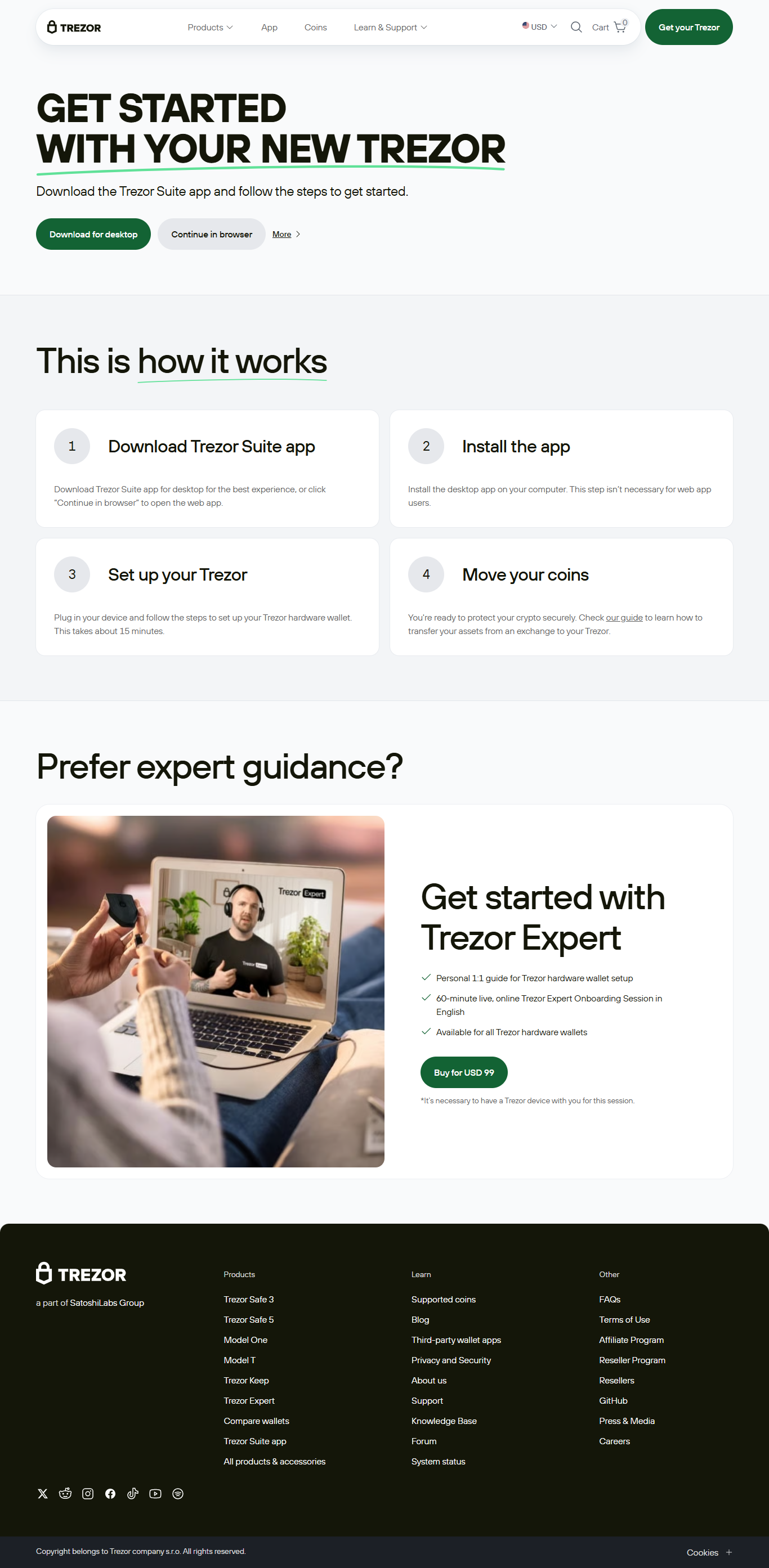
1. Download and Install
Get the official Trezor Suite from the Trezor website (always verify the domain to avoid phishing scams).
The app is available for:
Windows
macOS
Linux
Web browsers via a secure interface
2. Connect Your Trezor Device
Once installed, connect your Trezor wallet (Model One, Model T, or Trezor Safe 7) to your computer or mobile device using USB or Bluetooth (where supported).
3. Create or Restore Your Wallet
You can set up a new wallet or import an existing one using your recovery seed. Trezor Suite walks users through the setup process, including setting a secure PIN.
4. Manage Assets and Customize Settings
After setup, you’ll land on the Suite dashboard where you can:
Enable additional coins
Set display preferences
Activate privacy features like Tor or discreet mode
Adjust security settings
View your portfolio and start transacting
Who Should Use Trezor Suite?
Beginners
Trezor Suite makes hardware wallet usability approachable with intuitive dashboards and guided onboarding.
Intermediate Users
With built-in exchange and staking options, users can grow their crypto holdings without moving funds to less secure platforms.
Advanced Users
Coin control, passphrase wallets, and integration with third-party apps via WalletConnect support power users who want fine-tuned control.
Conclusion: Secure Control in a Self-Custody Era
In a space where your keys = your crypto, every decision about how you manage your assets matters. Trezor Suite Wallet pairs top-tier hardware security with a powerful management platform — giving users full control over their digital wealth without sacrificing usability or privacy.
Whether you’re tracking your first Bitcoin, swapping tokens, or building a diversified crypto portfolio, Trezor Suite offers a secure, transparent, and flexible environment to take control of your crypto securely.